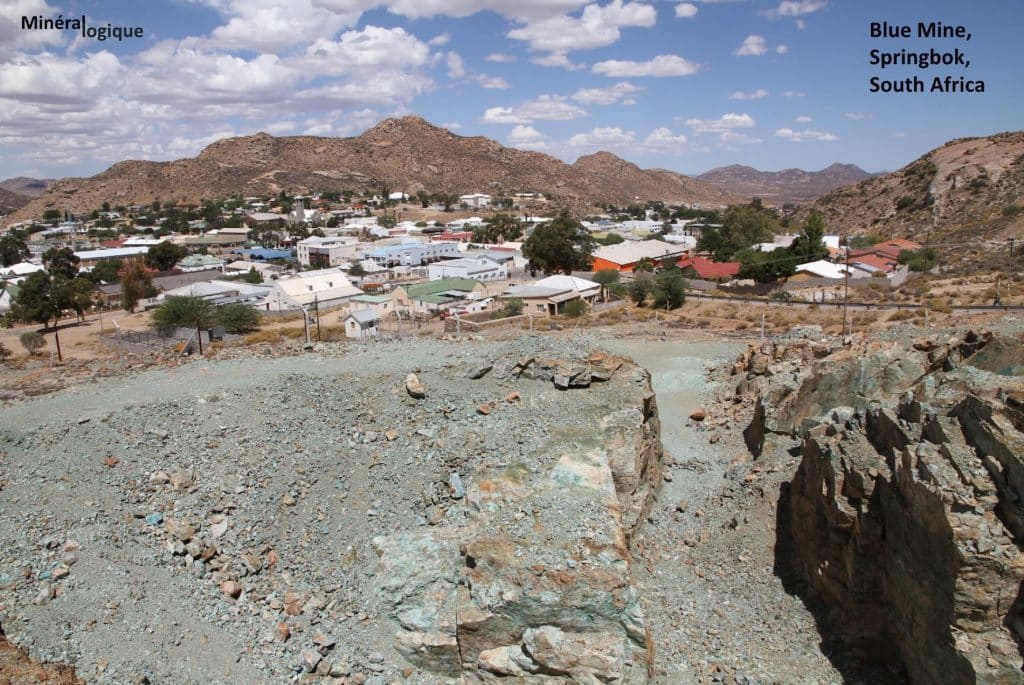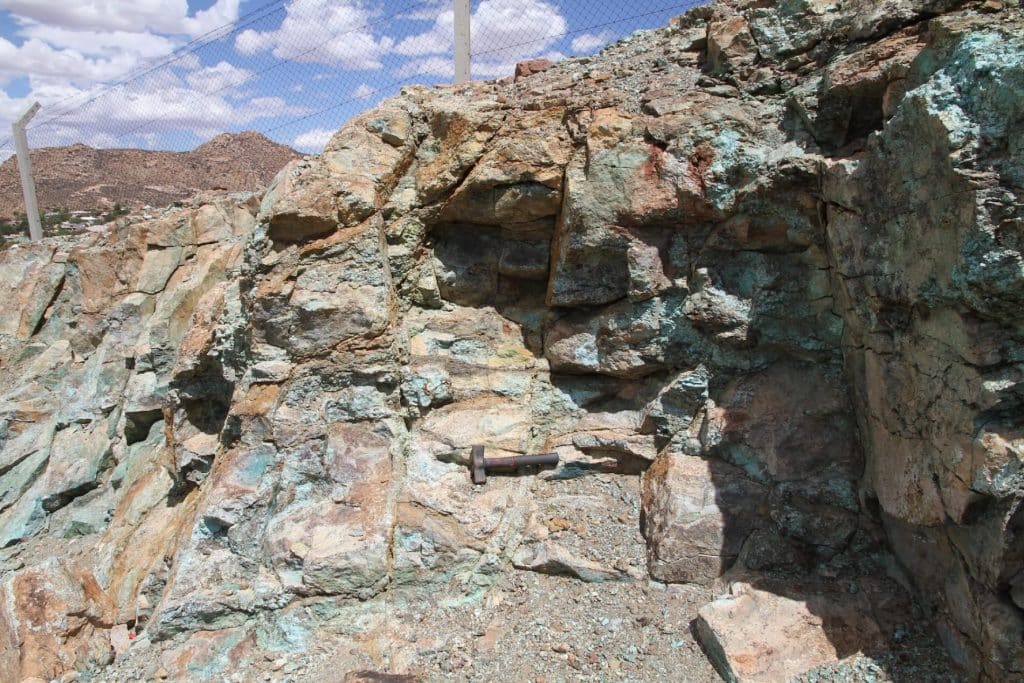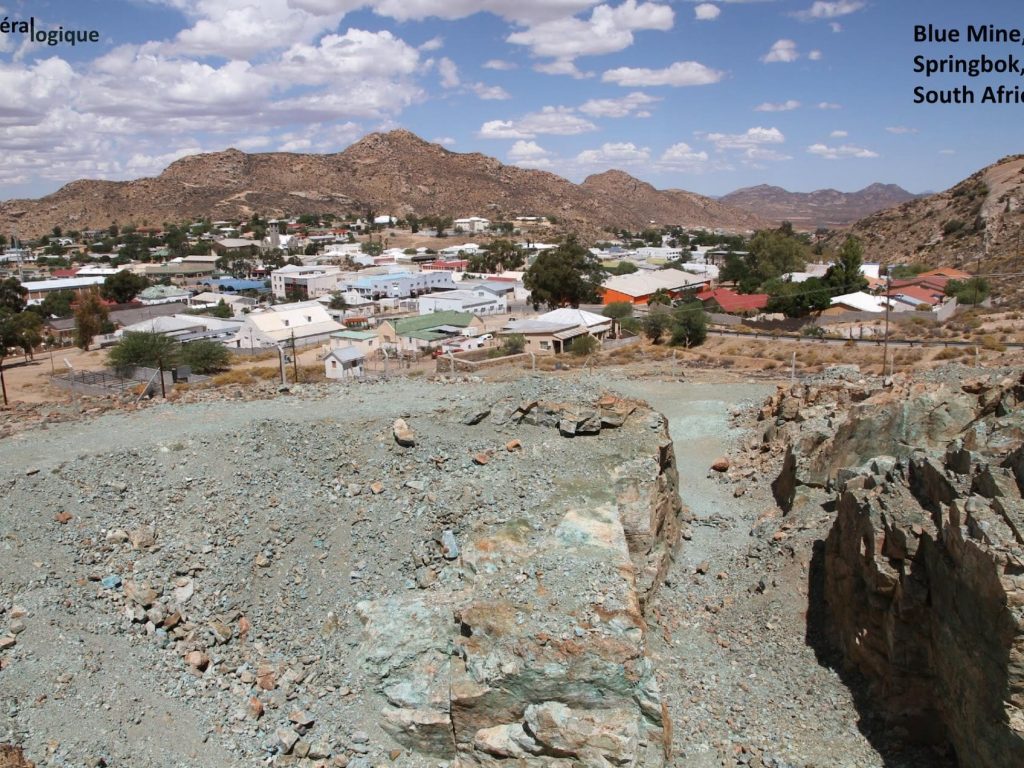
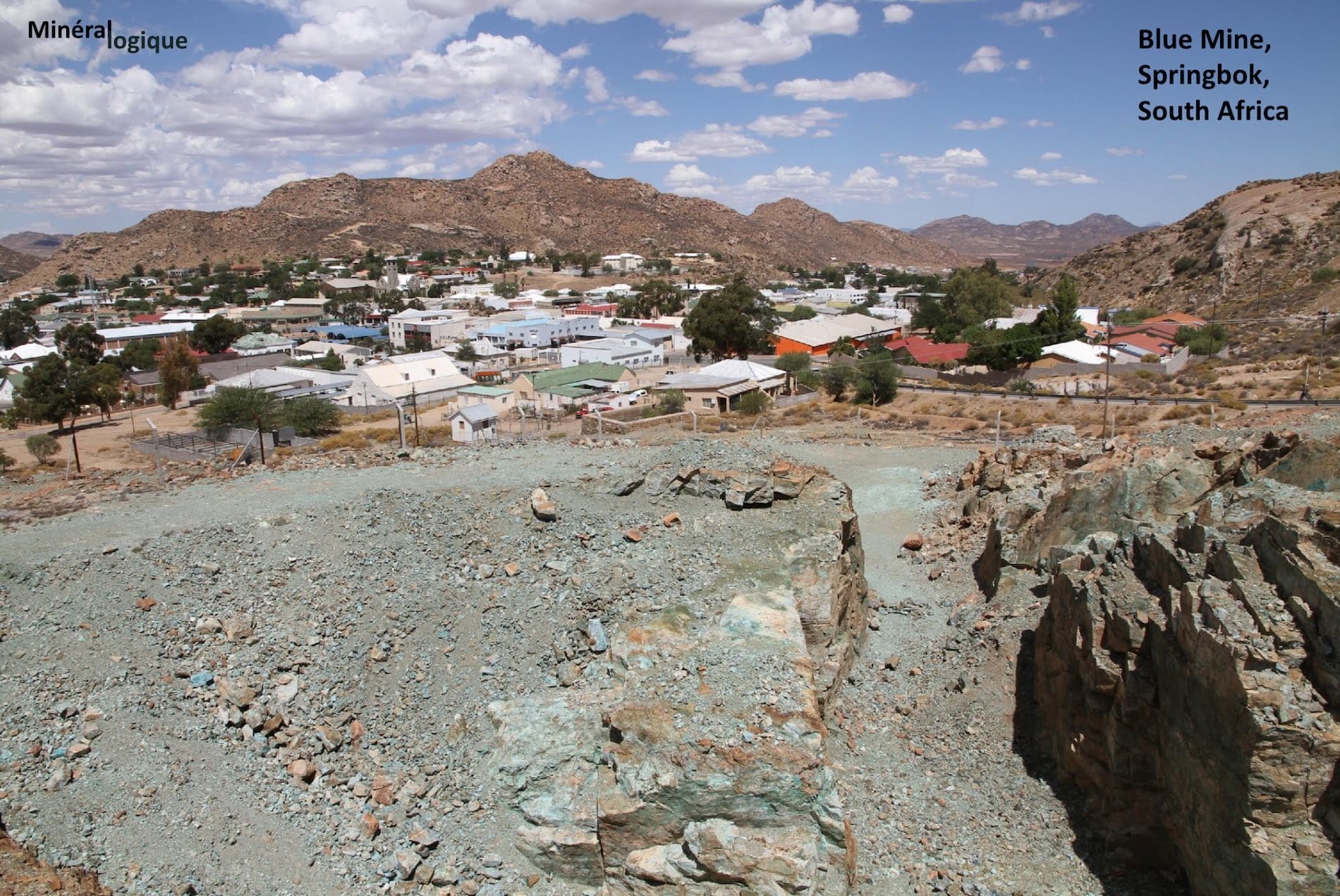
During a field trip in South Africa, I visited the famous Blue Mine in Springbok. This old mine is part of the O’Okiep copper district located in the Namaqualand Metamorphic Complex.
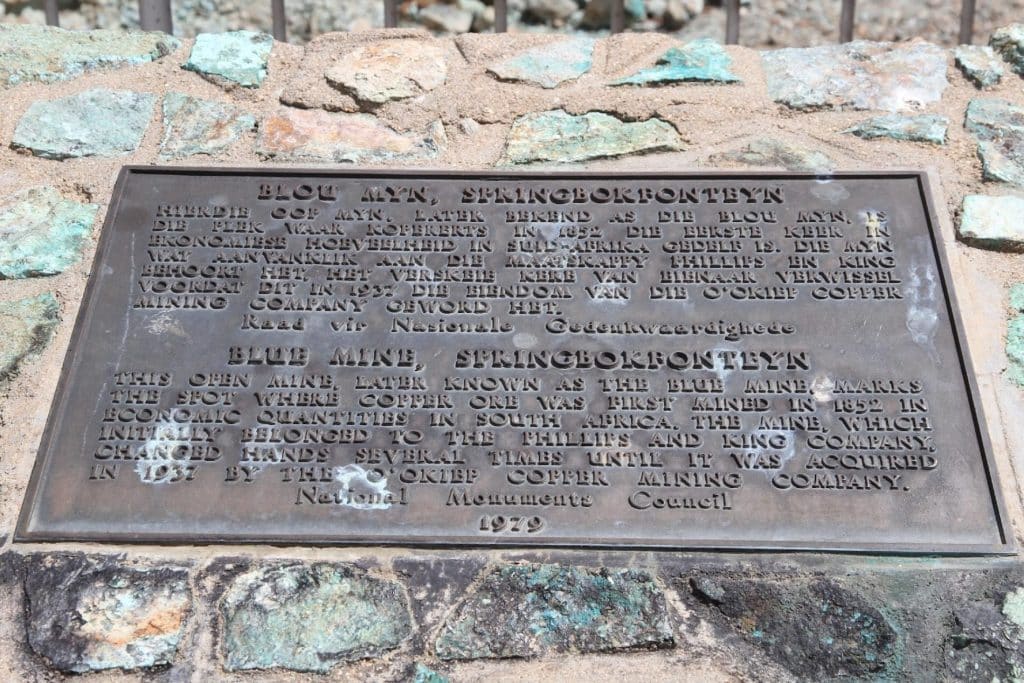
The Blue Mine is historically significant as it is considered as the first ‘mining operation’ in South Africa. The mineralised outcrops have been mined by the native people of Namaqualand long before the arrival of European, but industrial mining started only in 1852 with this very mine.
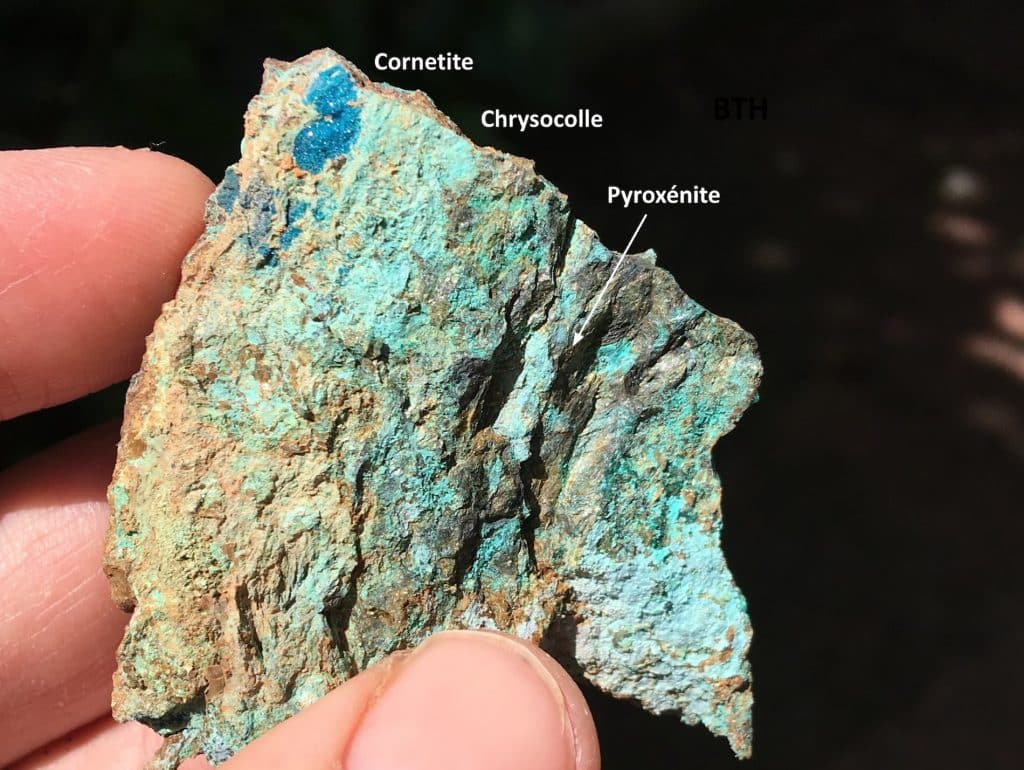
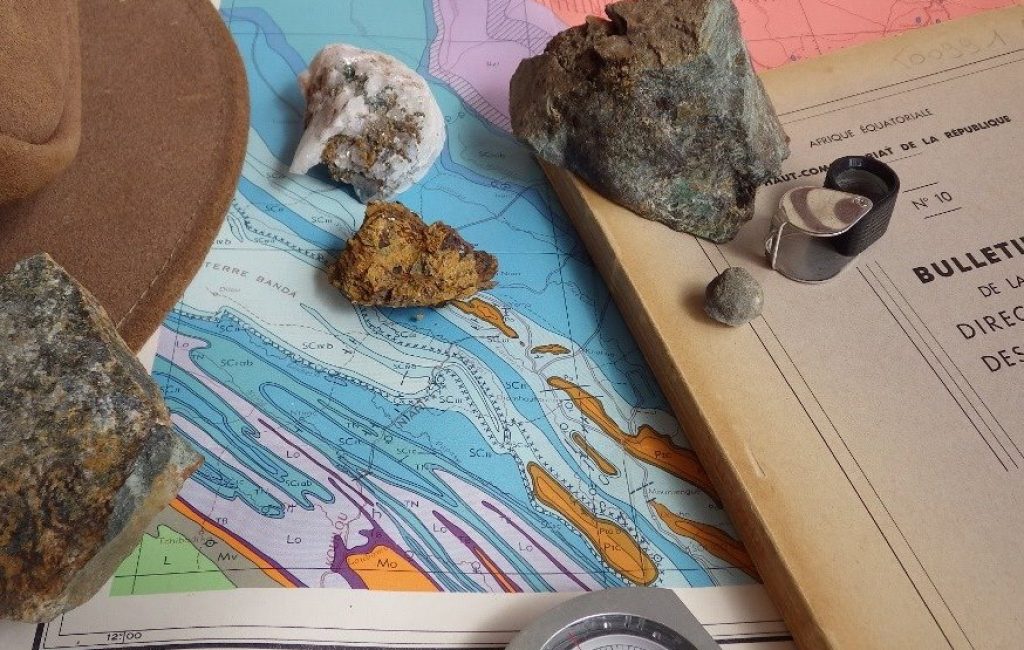
Copper mineralisation is found in isolated bodies of mafic intrusive rocks like orthopyroxenite. These magmatic sulfide deposits are still difficult to classify with high Cu/Ni and Cu/S ratios and possible similarities with IOCG deposits. Economic sulfides are mainly chalcopyrite and relatively abundant bornite. On many deposits metamorphic and meteoric fluids have remobilized Cu to form sulfides such as chalcocite and covellite.
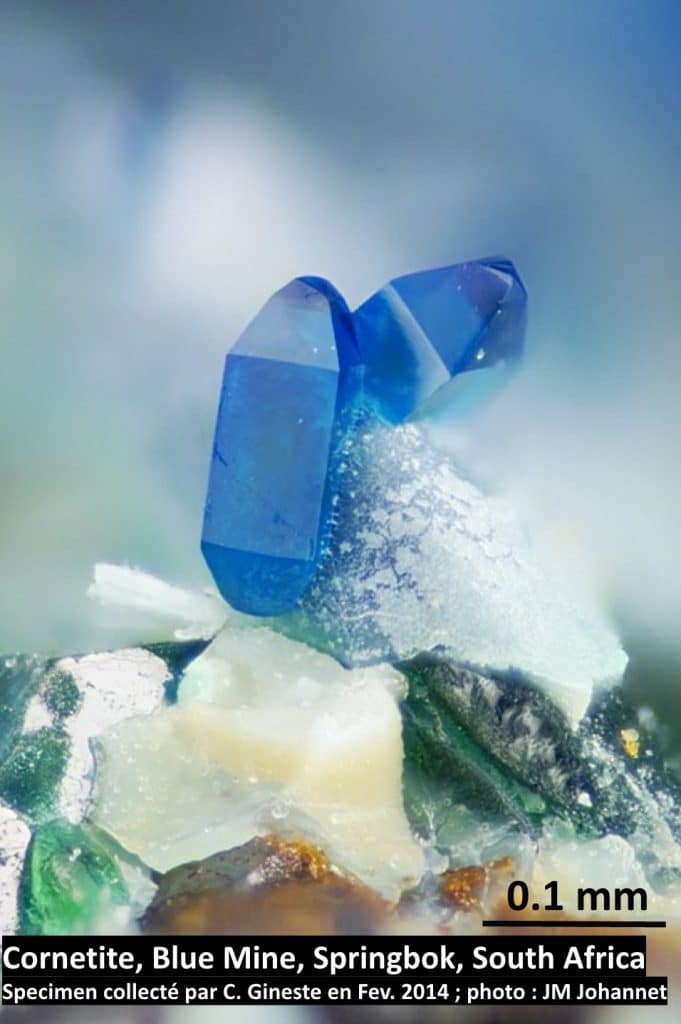
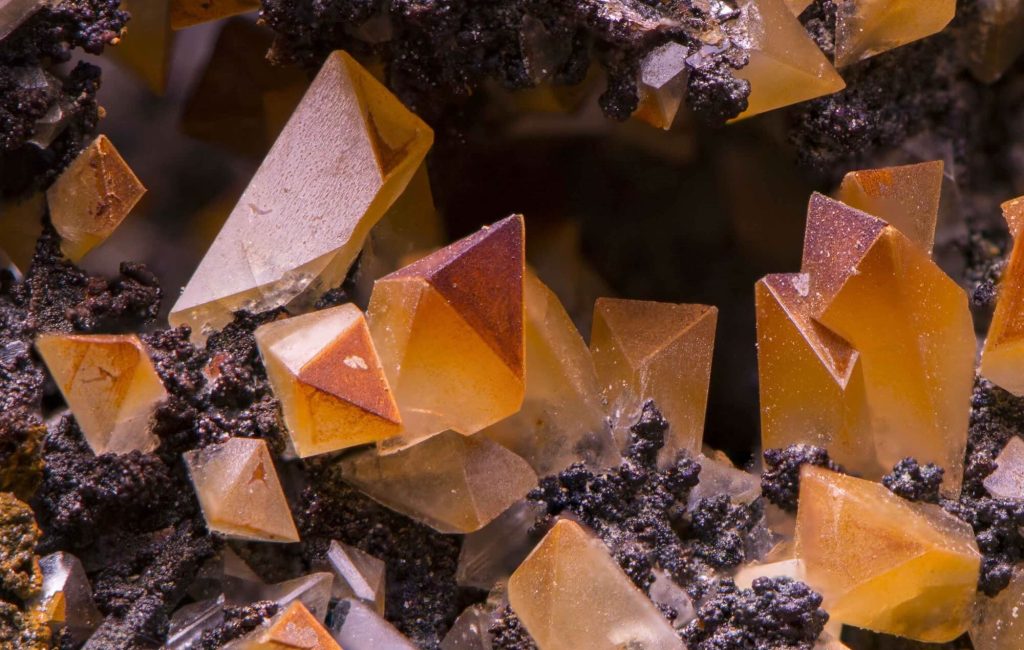
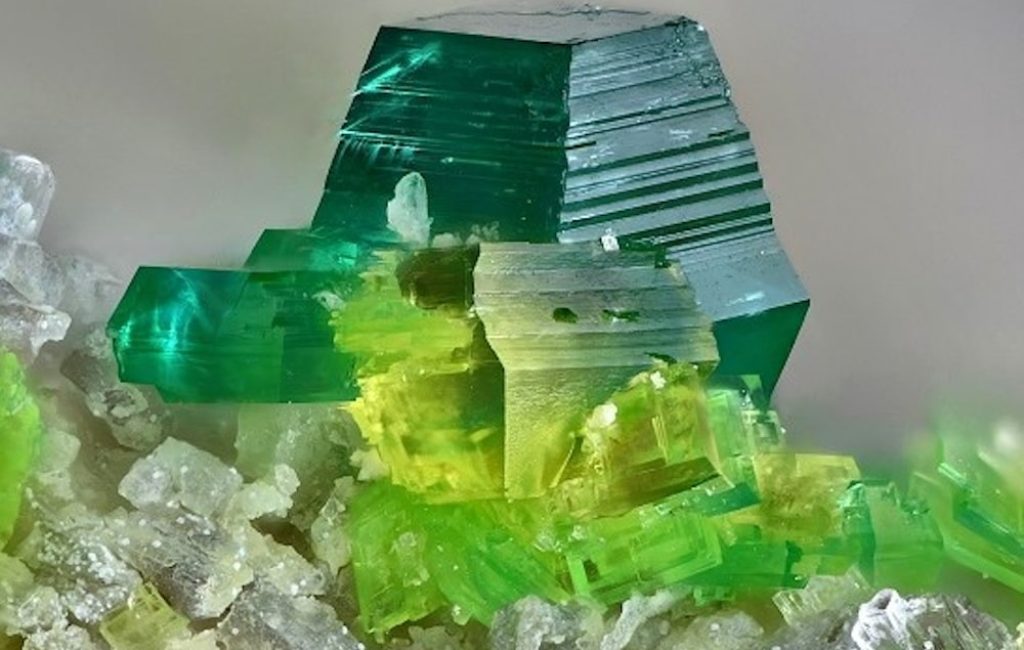
The Blue Mine name finds its origin in the secondary minerals formed in the oxidation zone. But not much carbonates such as azurite in this context, instead supergene species are mainly phosphates like cornetite and libethenite, with also silicates (chrysocolla).
Thanks to Jean-Marc Johannet, who captured the beauty of cornetite crystals, which are tiny here.