Euhedral Chromite

Share

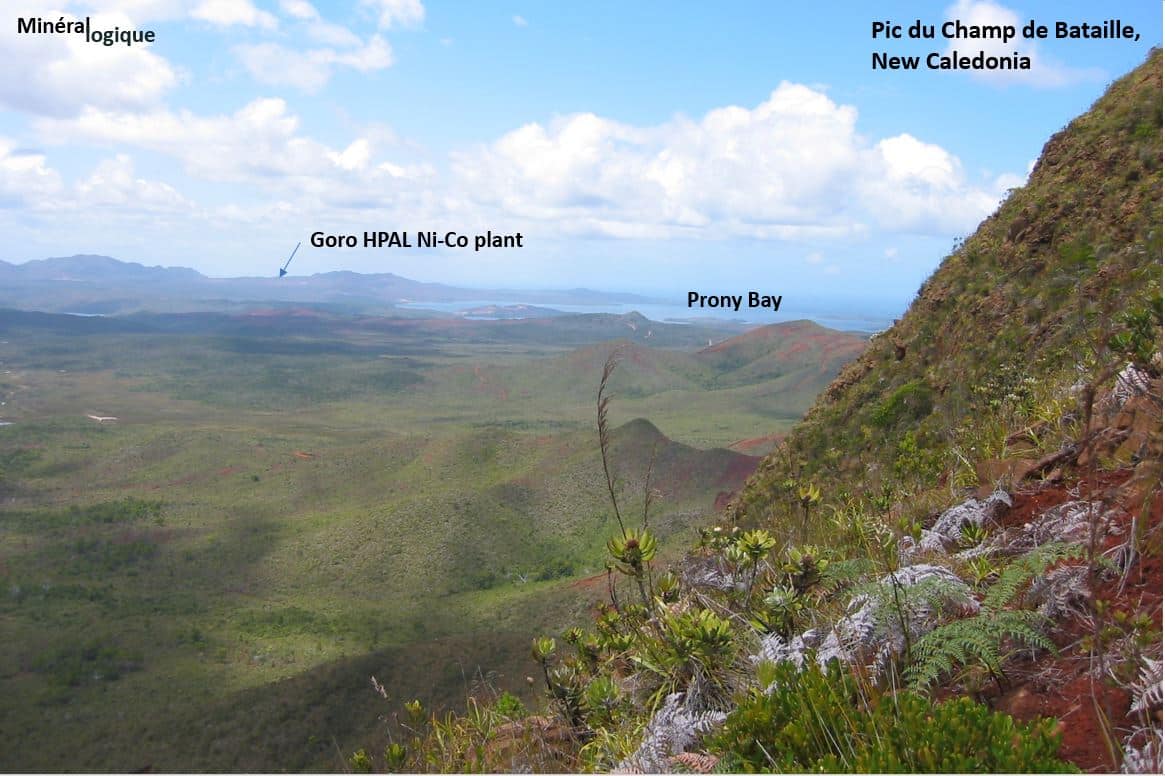
Few years ago, we were a small team carrying out a regional geological mapping campaign in the South of New Caledonia. On the rocky ridges surrounding the ferricrete plateaus of the Prony Bay, we mapped dunite and harzburgite with varying degrees of serpentinization, as well as gabbros dykes.

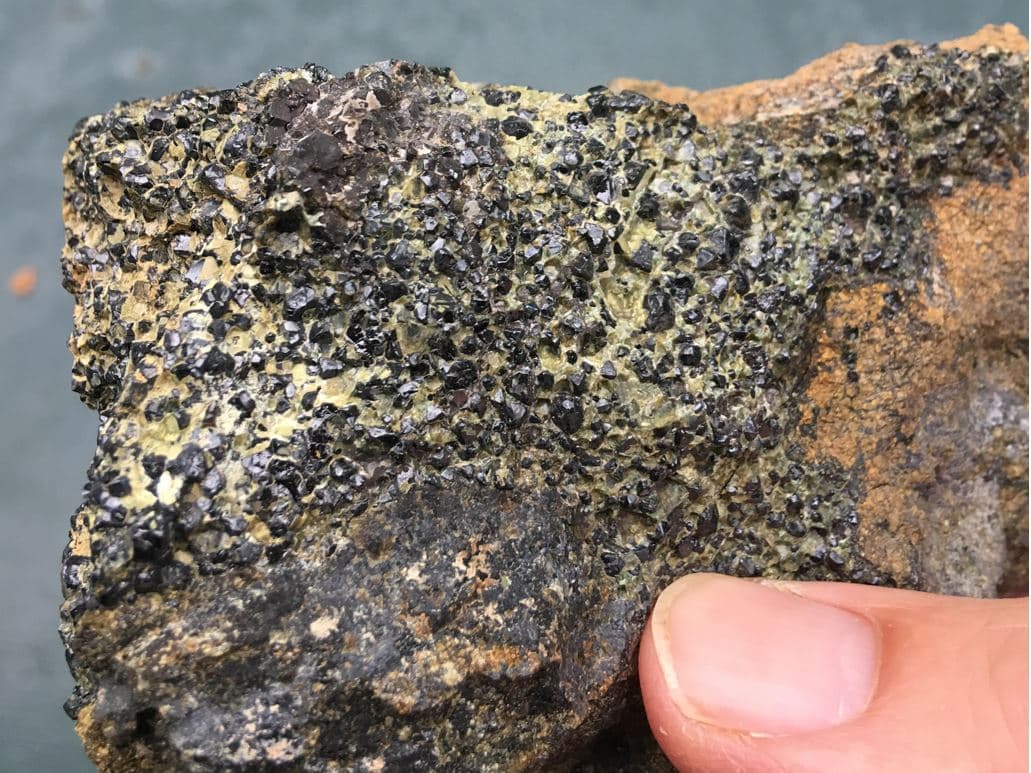
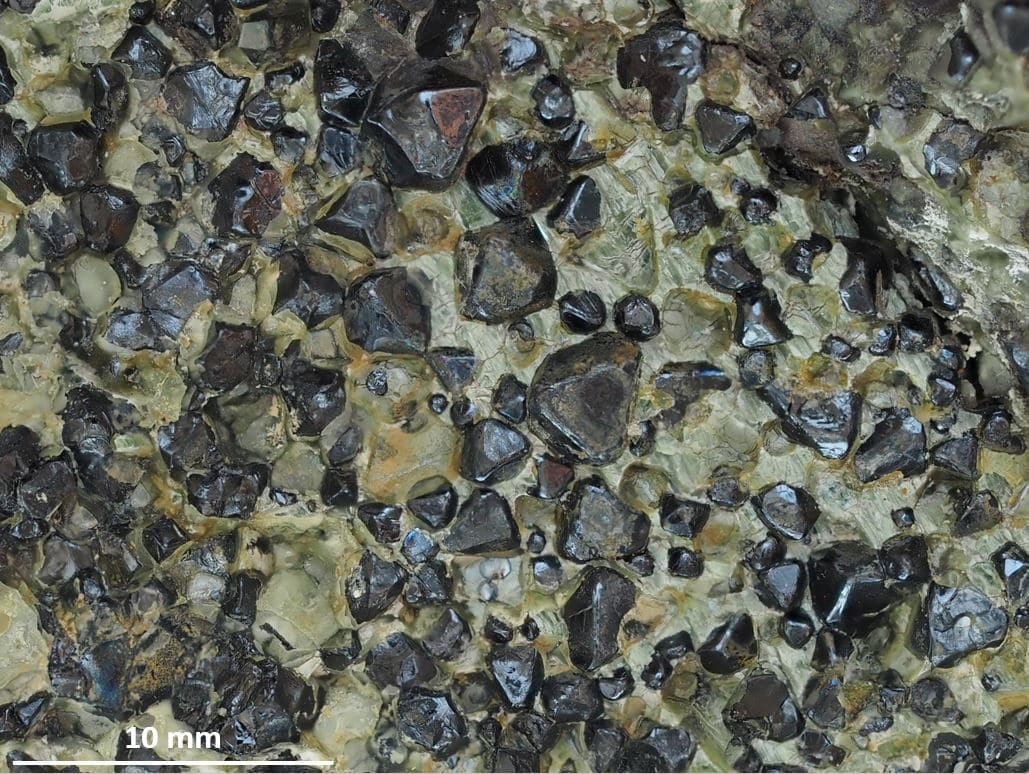
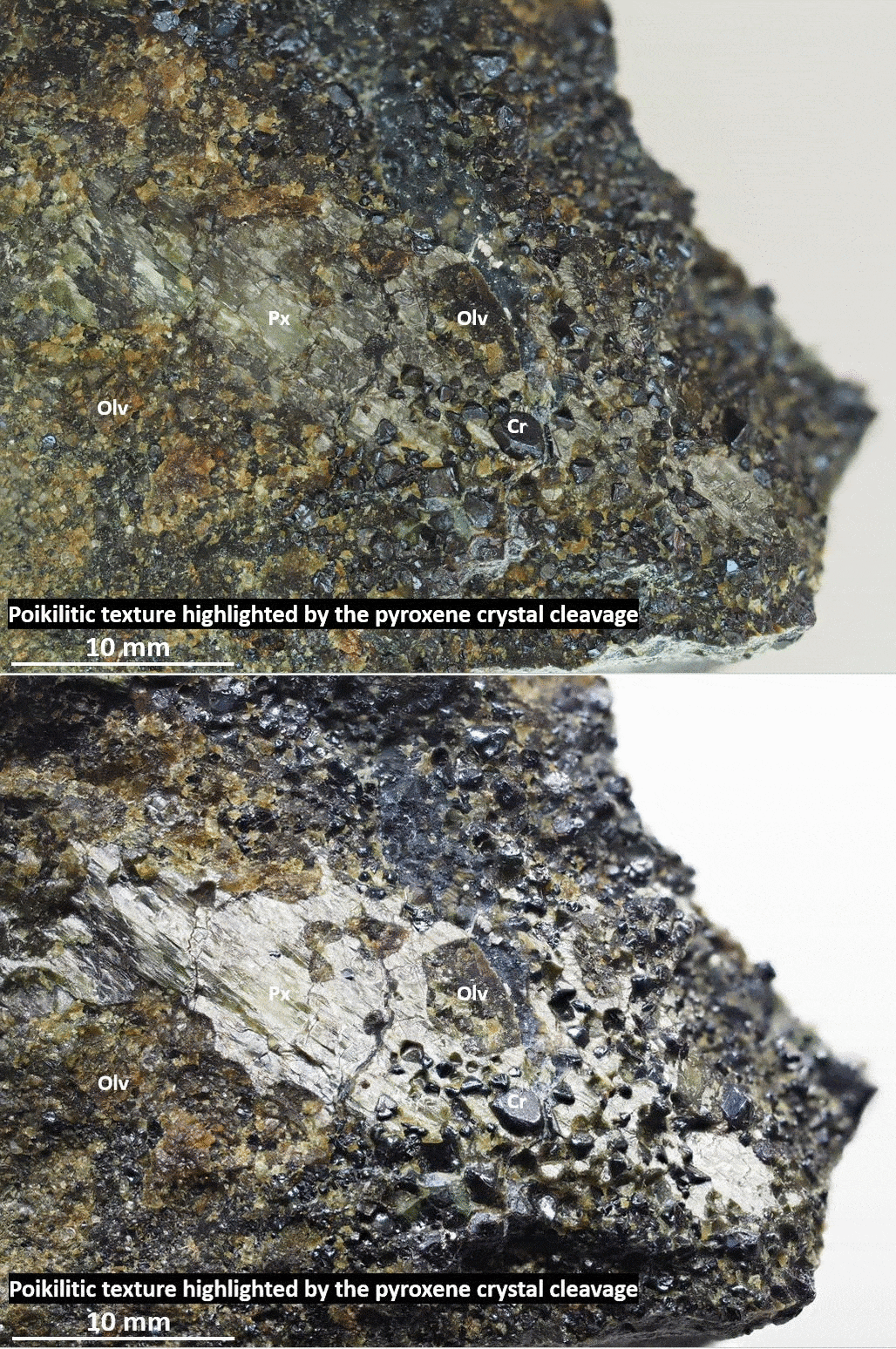
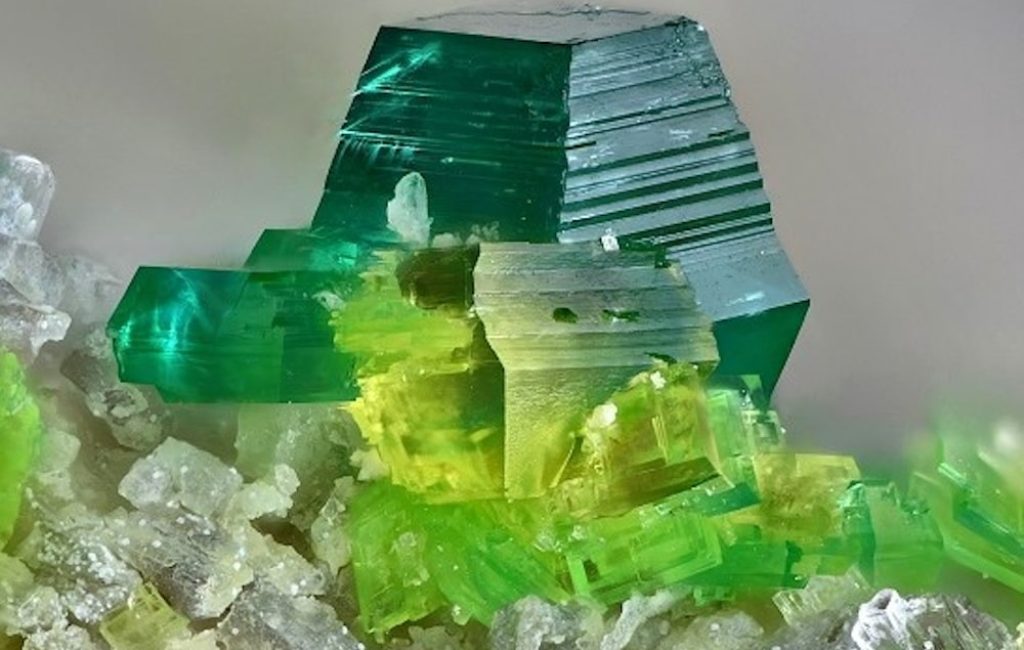
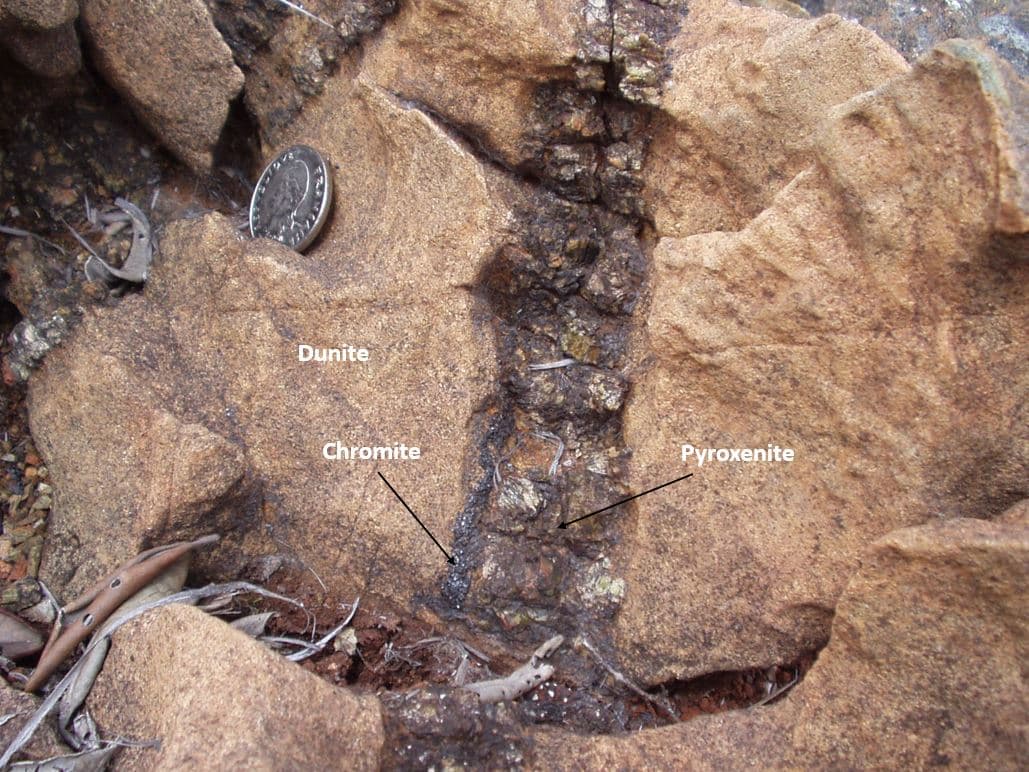
That day, on the steep slopes of Pic du Champ de Bataille, I came across a small dunite and pyroxenite outcrop with nice chromite. Nothing very surprising in the Massif du Sud, where podiform chromite occurrences abound with truly diverse facies and textures. But at the first geopick blow I realized that this chromite was remarkable because of its euhedral crystals, relatively rare for this spinel. In this sample octahedron crystals are floating within large pyroxene crystals with a poikilitic texture.

In New Caledonia, chromite was mined with varying degrees of success as early as 1880. In the early 20th century the island was even the 3rd world producer thanks to the Tiébaghi deposit at the other end of the Grande Terre (but that will be another story).
Journal

Latest articles from Mineralogique

The Mérétrice mine, New-Caledonia

The former lead-zinc-silver mine at Mérétrice was a small operation that was active intermittently between 1884 and 1930 in the far north of New Caledonia.

Mineralogique Blog

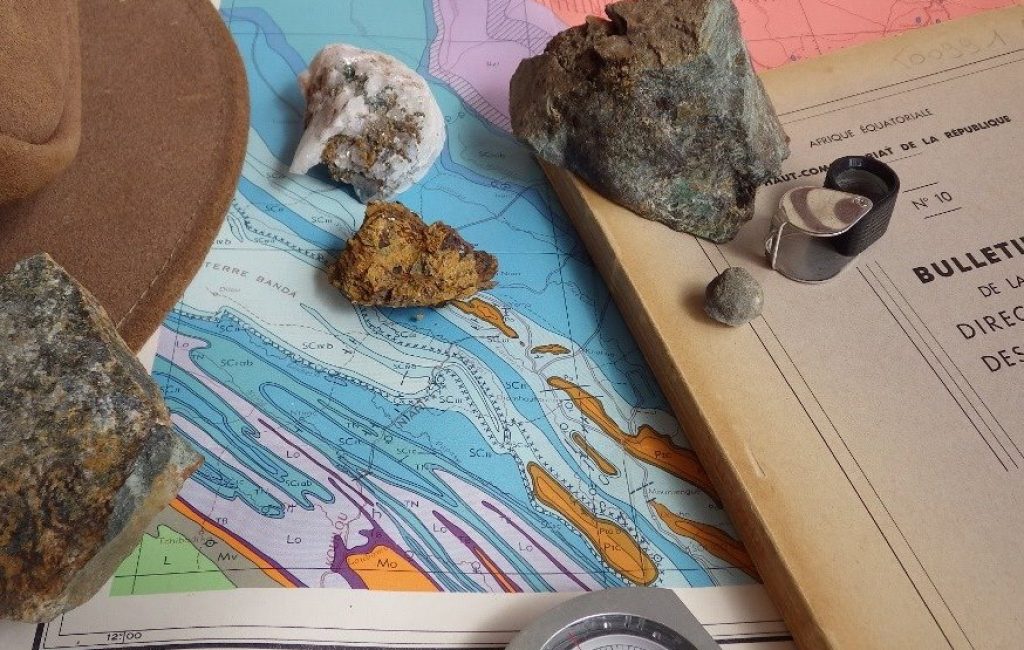
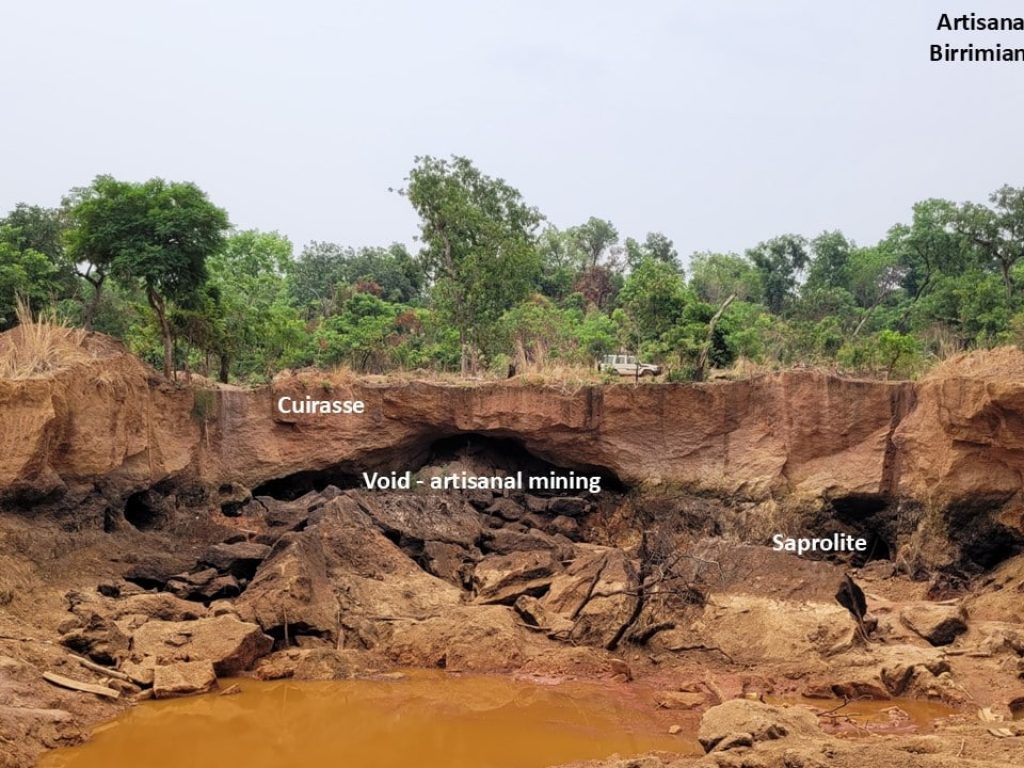
Somewhere in West Africa, while conducting reconnaissance on a remote site where a major gold rush took place in 2014, I found a sample that was unexpected in the context of the gold deposits in the sub-region. At this site, while most of the artisanal miners focused on saprolite, some miners followed the mineralisation down to the bedrock, which consisted of very hard quartzite on the edge of a granitic intrusion. Artisanal mines in fresh rock are relatively rare given the challenges of digging at these depths; only very high grades could justify such work.
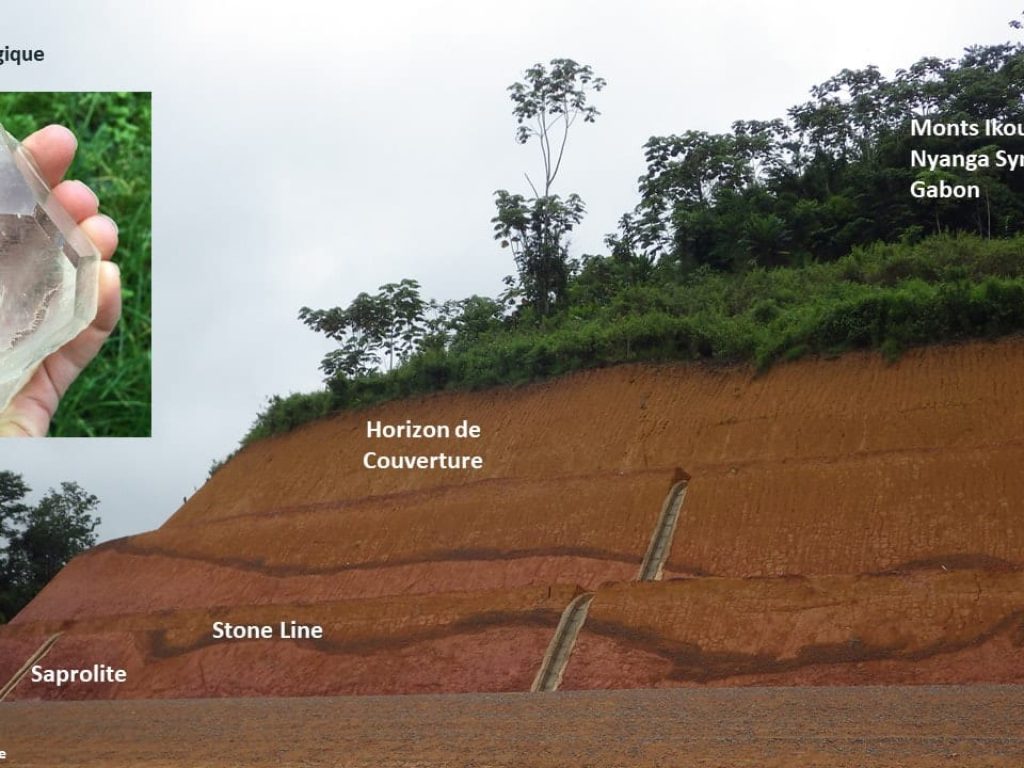
A few years ago, road works between Ndende and Tchibanga uncovered beautiful sections of Gabon's distinctive weathering profile. We used the opportunity to sample the saprolite in order to obtain valuable geochemical information. The yellowish layer at the top of the embankment is the Cover Horizon, which is actually wind-blown silt (loess) from southern Africa, deposited around 35,000 years ago. It varies in thickness from 1 to 4 metres and is found almost everywhere in Gabon. It covers much of the bedrock, but is currently being eroded.
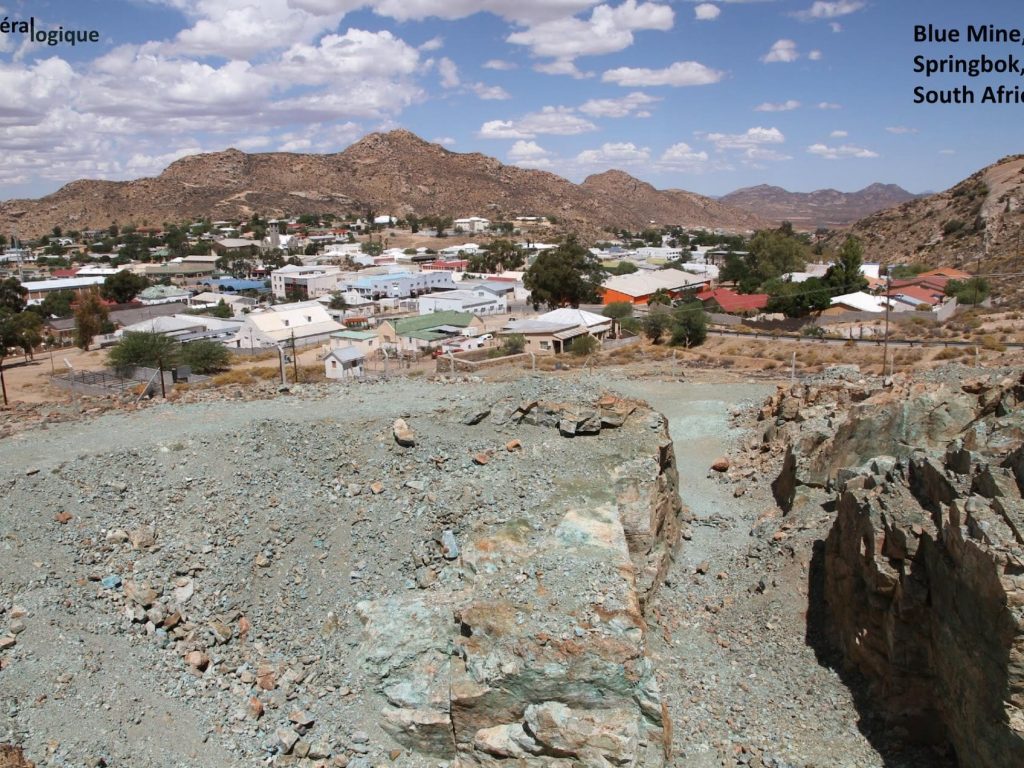
During a field trip in South Africa, I visited the famous Blue Mine in Springbok. This old mine is part of the O’Okiep copper district located in the Namaqualand Metamorphic Complex. The Blue Mine is historically significant as it is considered as the first ‘mining operation’ in South Africa. The mineralised outcrops have been mined by the native people of Namaqualand long before the arrival of European, but industrial mining started only in 1852 with this very mine.