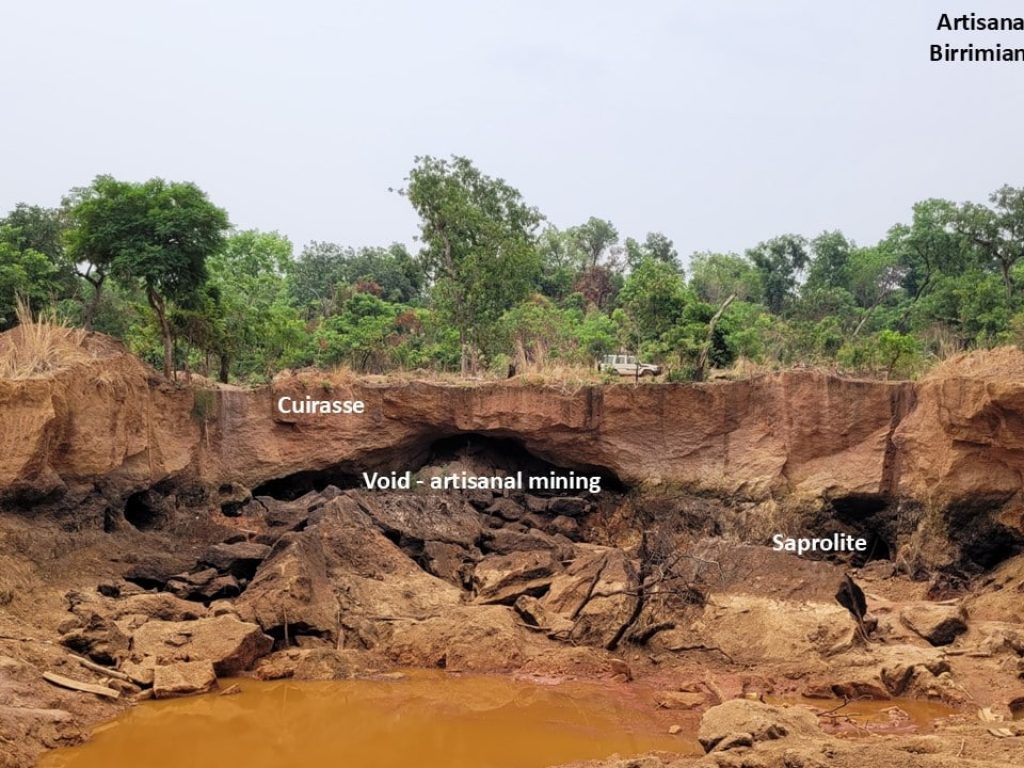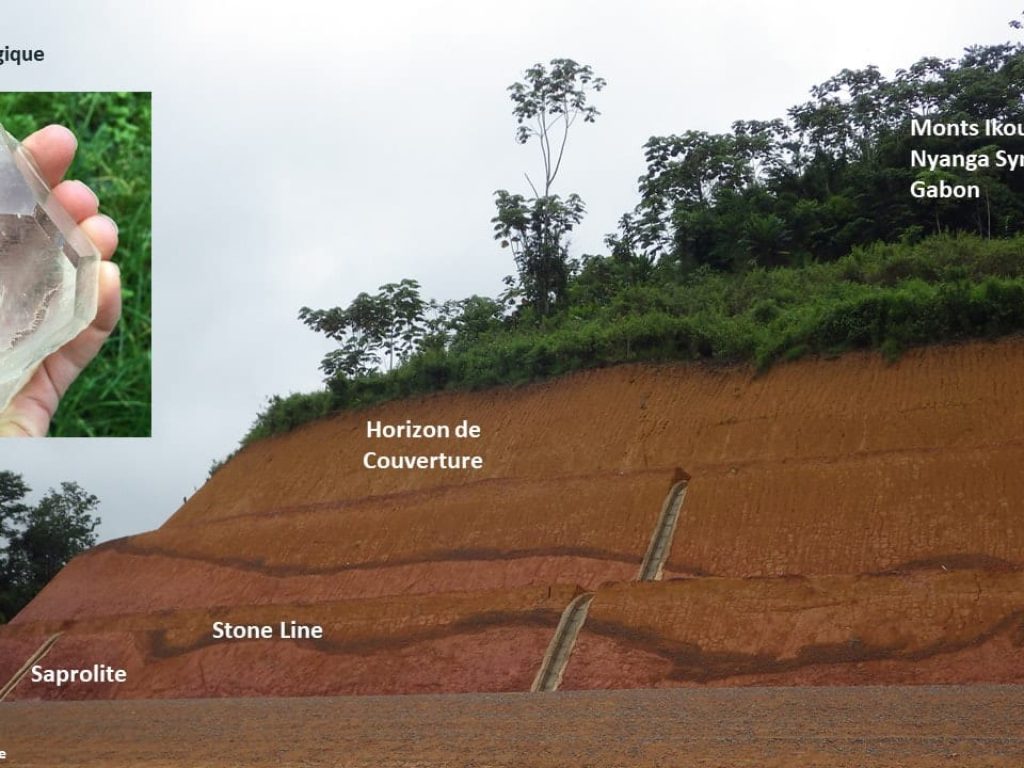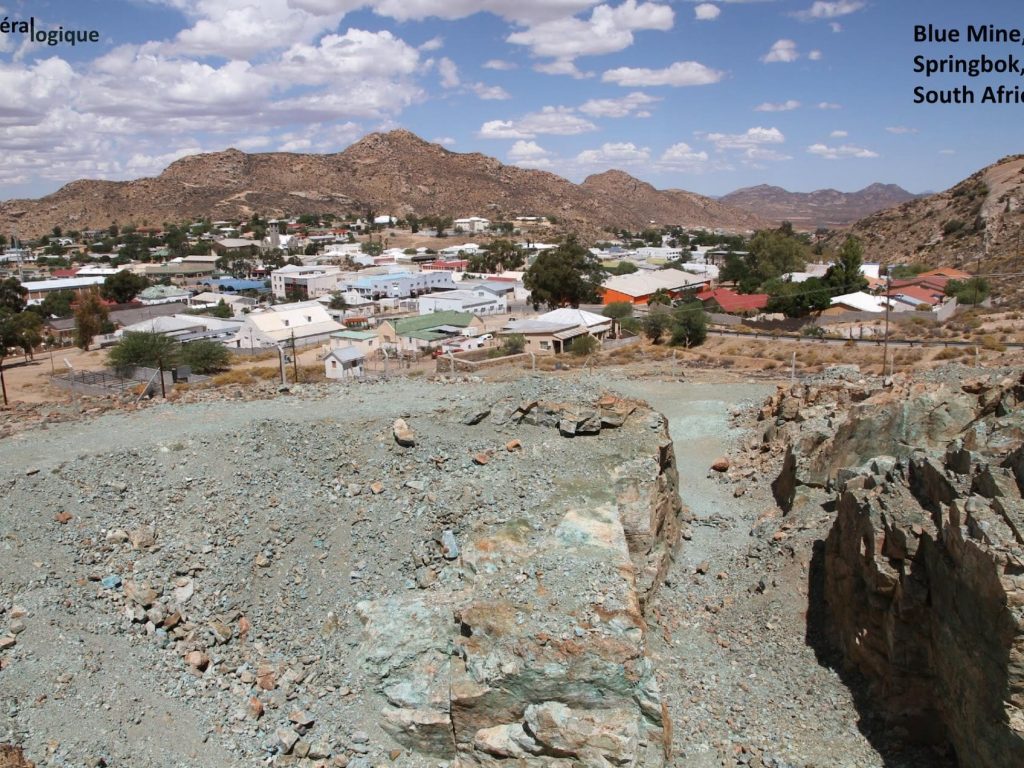
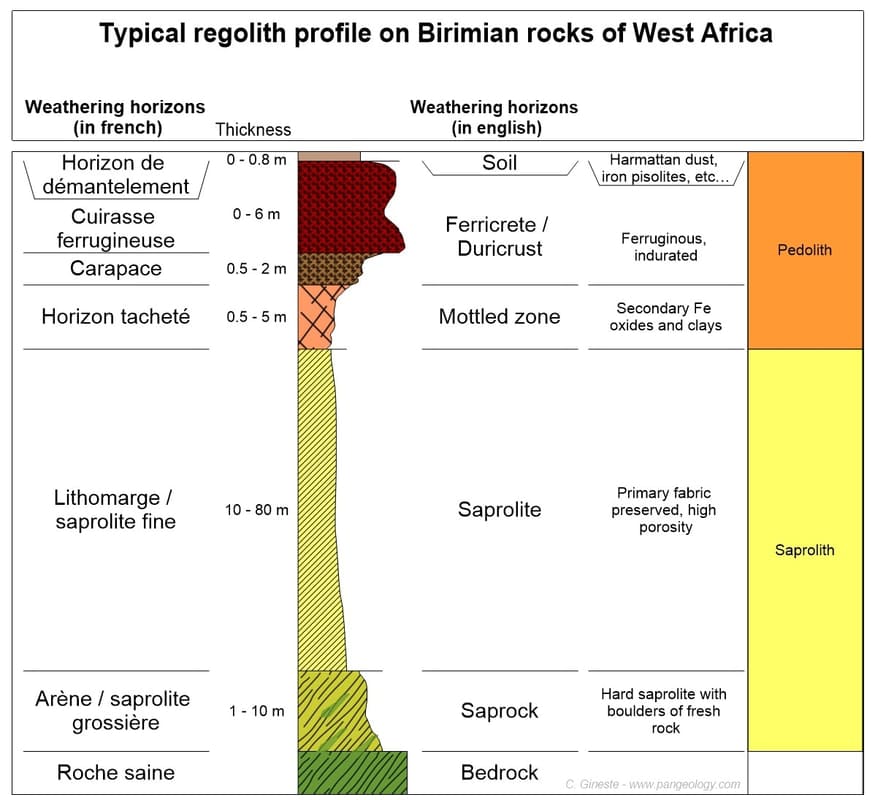
The weathering profile developed on the Birimian rocks of West Africa is, or looks, relatively simple. But its genesis is not. A few years ago, within a research team of IRD, I worked in the Tenkoto area (Senegal), already studied by P. Michel in the 60’s and 70’s and very adapted to examine the filiation of the ferricrete.
In the 1960s and 1970s, several BRGM and ORSTOM researchers were interested by the weathering profiles capped with a ferruginous duricrust (aka ferricrete or cuirasse in French), particularly in Senegal. Two schools of thought confronted each other on how the weathering profile was formed.
The autochtonist school (residual ferricrete)
Nahon, Pion and Leprun studied the weathering processes on a geochemical scale and see the profile as a logical succession of alteration that gradually deepens. They consider ferricrete as the ultimate stage of rock weathering.
The allochtonist school (transported ferricrete)
To these three authors, who envisage the autochthony of ferricrete, is opposed the vision of the geomorphologists Michel, Grandin, and Boulet, who studied ferricretes on a much larger spatial and temporal scale. Indeed, they distinguish the residual bauxitic duricrust of the old African Surface from the younger ferricretes which, according to them, largely correspond to the cementing of detrital material and the remobilisation of iron from the overlying duricrusts in the landform.
To put everyone in agreement, it would seem from our experience that both cases of residual or transported ferricrete can be found in West Africa – even if they are mostly transported.
Let’s look at a typical case of a transported ferricrete following the footsteps of P. Michel who studied the geomorphology of Eastern Senegal and particularly the Tenkoto area (where I worked in 1999-2000).