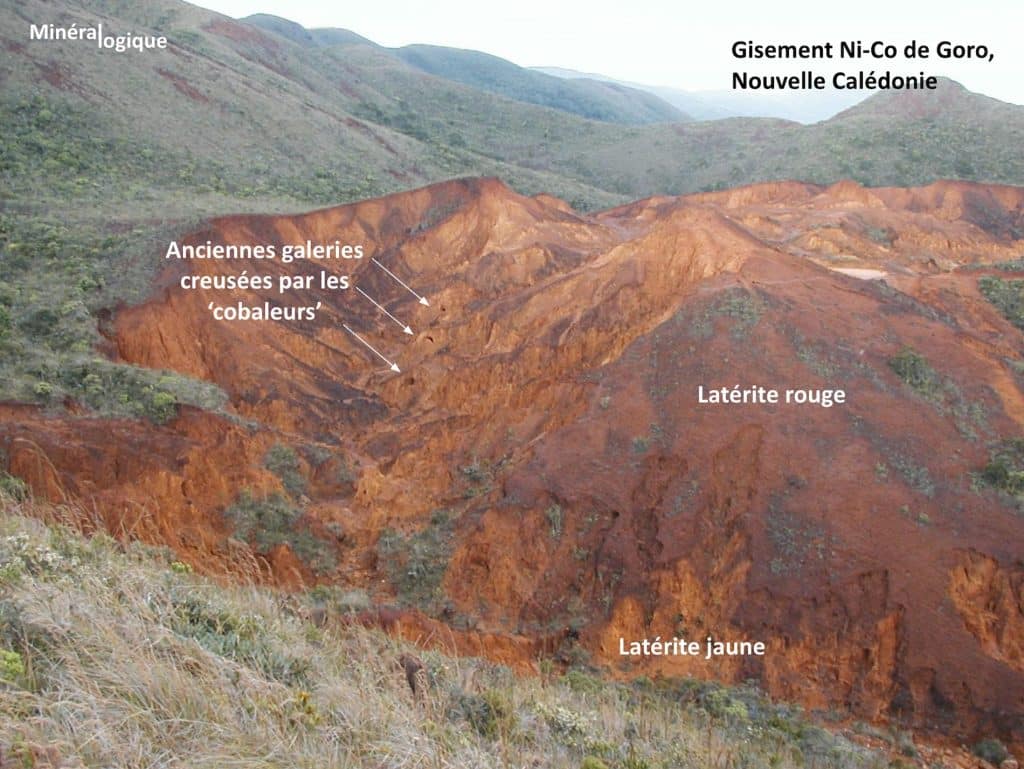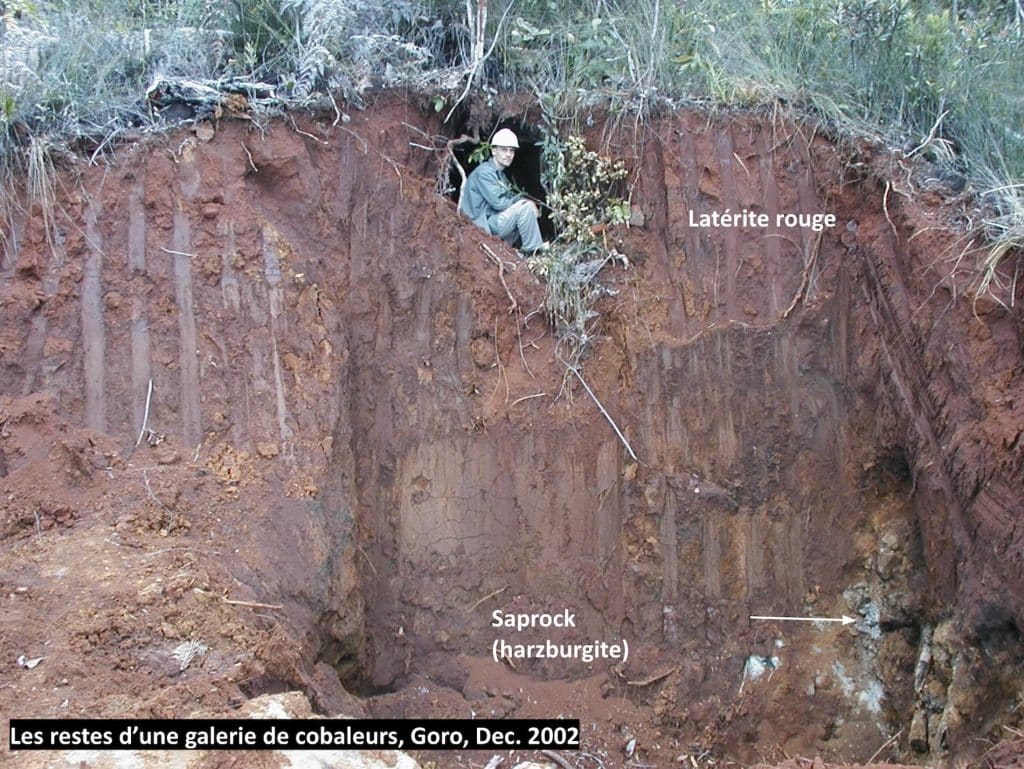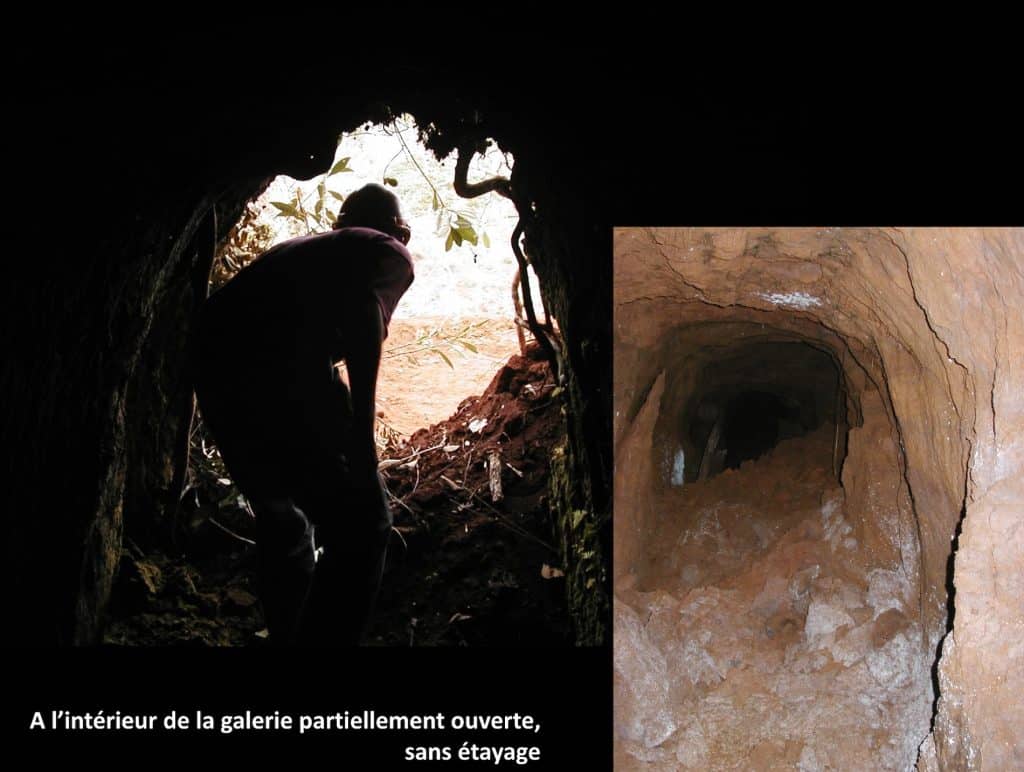
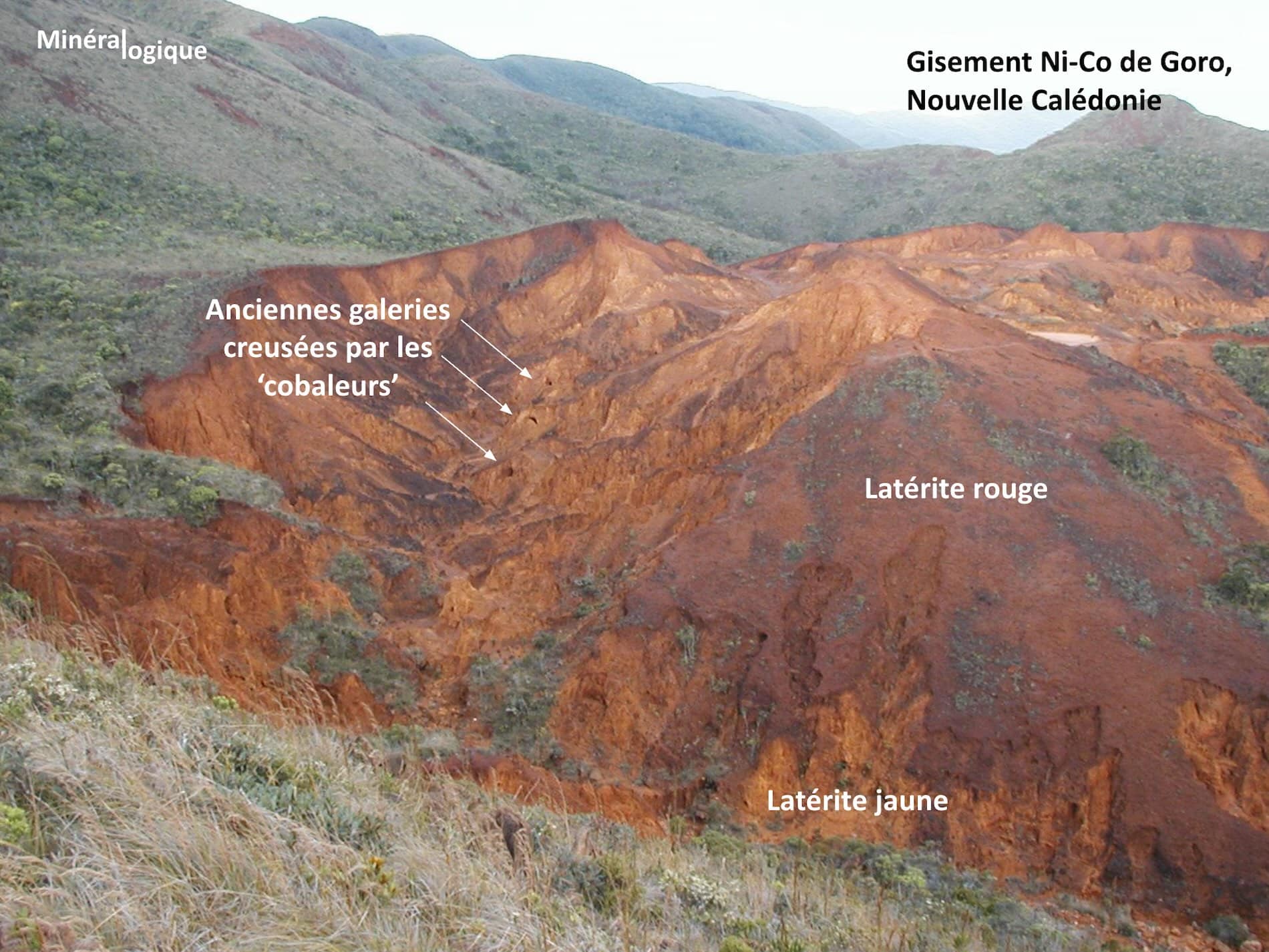
In the early 2000s, during an exploration drilling program on the rim of the Goro deposit, our earthworks uncovered an old adit. It was dug by ‘cobaleurs’, those cobalt miners who were active in NC at the beginning of the 20th century. At that time, NC was almost the only world producer of this rare ore, then the discovery of the Copper Belt and its rich sulfides and oxides Co deposits will rapidly reduce New Caledonian production.
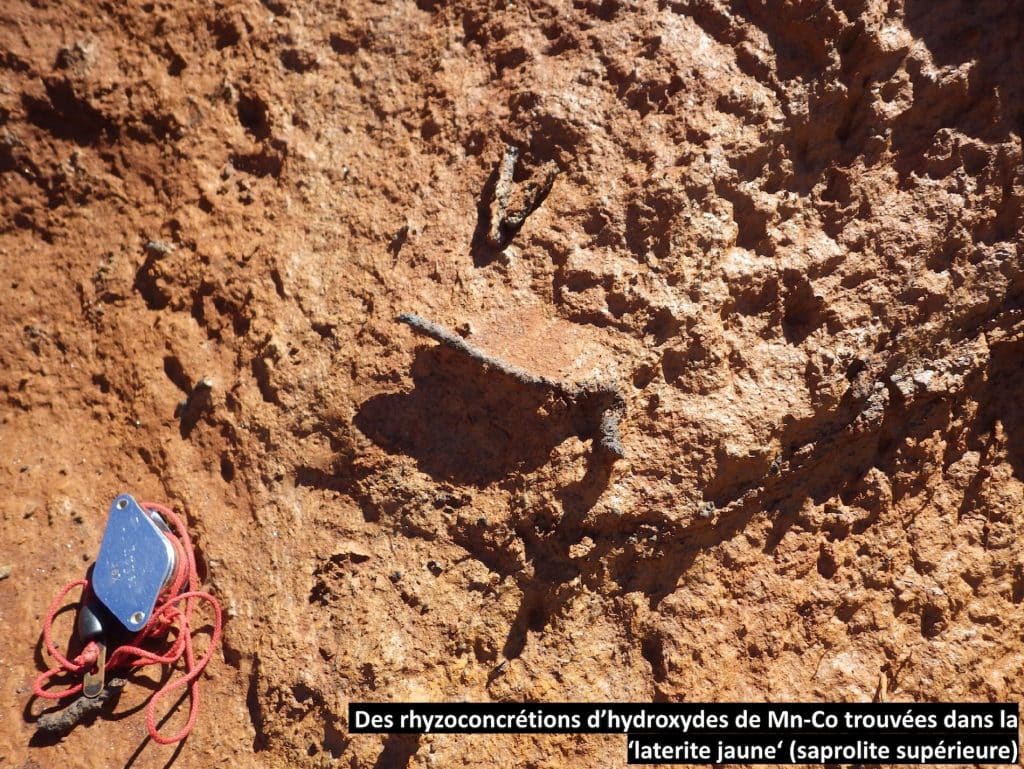
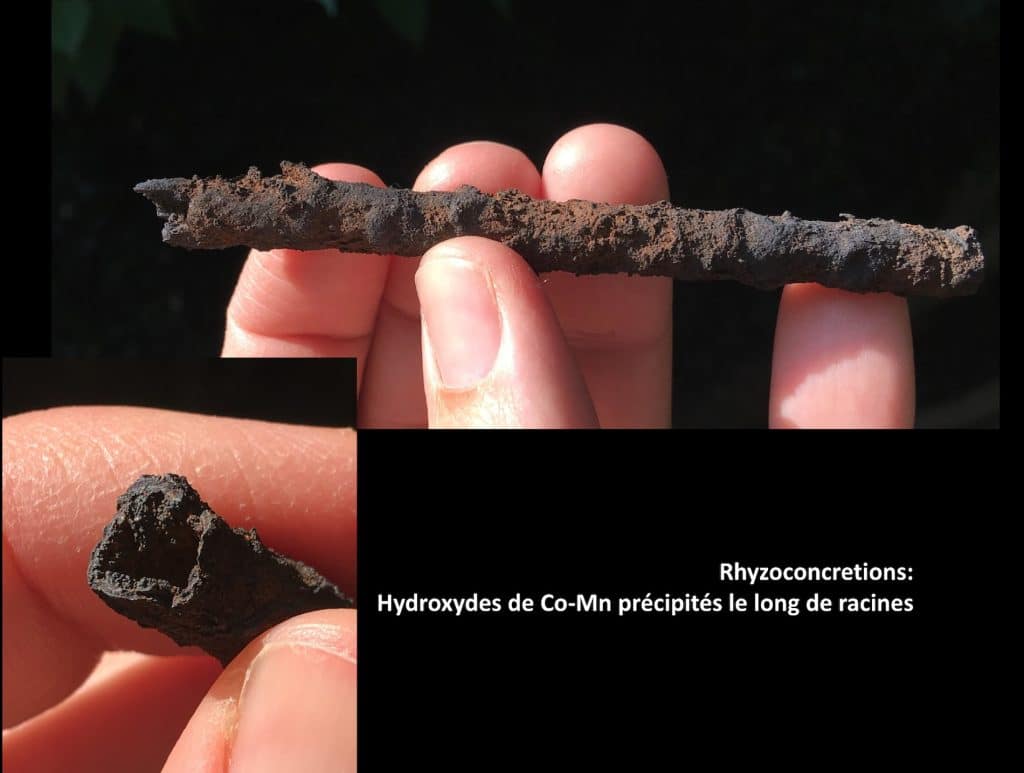
The Co bearing phases are composed of minerals such as heterogenite and asbolane. These manganese-cobalt-(nickel) hydroxides are mainly found in the oxide ore (yellow laterite), just above the contact with silicate ore (saprolite). Their indurated facies were the target of the cobaleurs. They form encrustations along root systems that are common when the oxide ore is close to the surface and would suggest that deposition of these minerals occurs particularly in the zone of water table fluctuation.
Today, New Caledonia is a small producer, with cobalt being a by-product valorizing its low-grade nickel ore processed on site at the Goro HPAL plant or exported. This ore is supposed to be ‘clean ore’ compared the one coming from some artisanal operations in the DRC.